When most people think about firearm safety, they picture muzzle discipline, safe handling or secure storage. One of the most overlooked parts of responsible ownership is personal protective equipment (PPE).
In short
Wear eye protection, hearing protection and the right clothing every time you shoot. Gunshots reach 140 to 175 dB, hot brass burns and most range injuries are avoidable.
Whether you are training, practicing, competing or spending a quiet morning on the range, PPE plays a major role in preventing avoidable injuries.
What PPE means at the range
In the firearm world, PPE is gear designed to protect you from:
- Noise exposure
- Flying brass
- Impact and debris
- Burns from hot cases
- Clothing-related hazards
It is not about fashion or looking tactical. PPE is practical equipment that reduces risk and keeps you focused on safe handling and building skill.
Why it matters for every firearm owner in South Africa
Shooting environments here range from indoor ranges to outdoor bushveld layouts, and each has its own risks. Good PPE does five things.
It protects your hearing
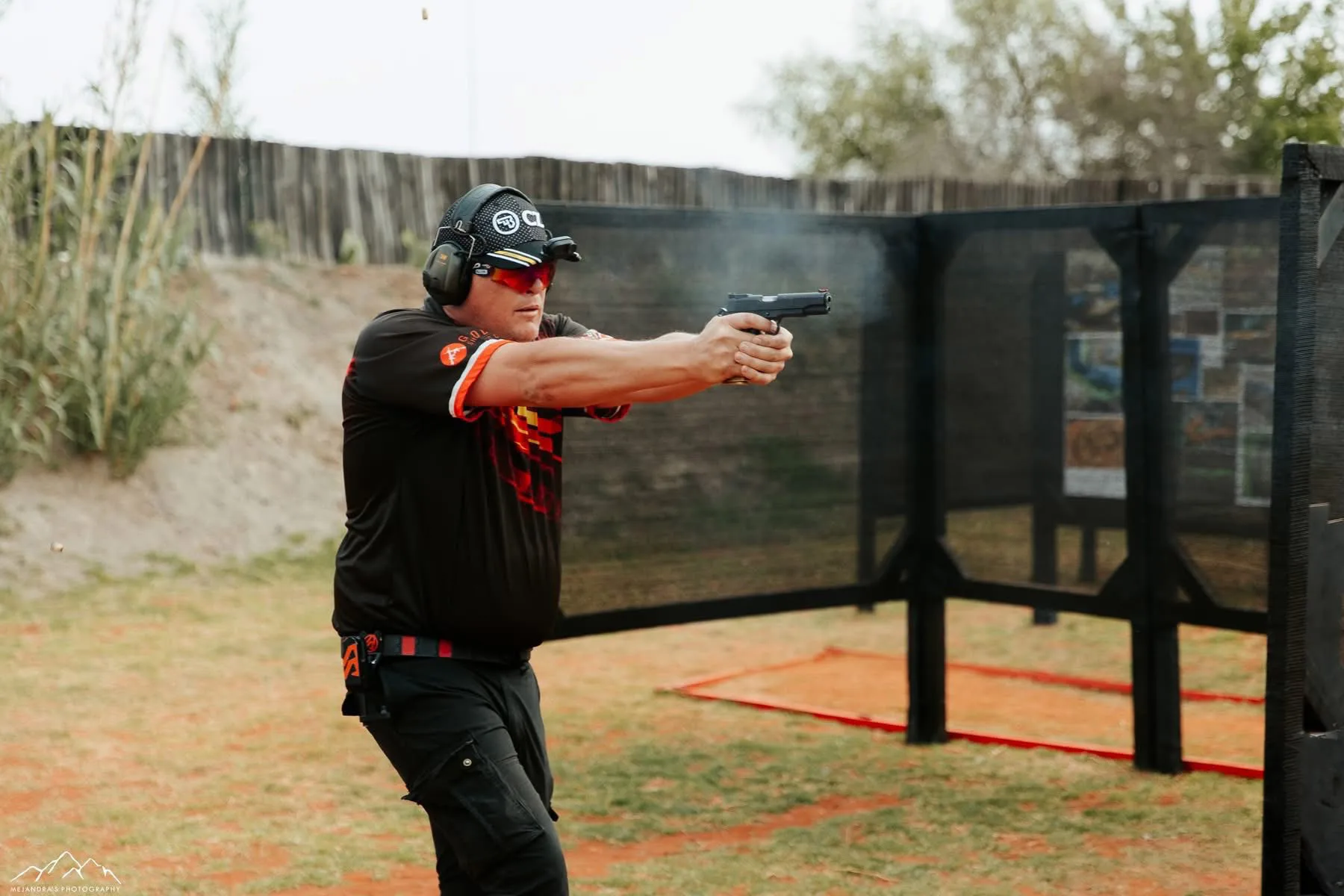
Gunshots range between 140 and 175 dB, far above the level that can cause permanent hearing damage. Good hearing protection, electronic or passive, brings this down to safer levels without cutting you off from range commands.
It shields your eyes
Empty casings eject fast and hot. Add unburnt powder, dust and fragments, and there is a real chance of eye injury. Impact-rated shooting glasses lower that risk dramatically.
It prevents burns
Hot brass can drop onto your skin, get stuck inside open collars or bounce into low-cut tops. That is why clothing counts as PPE too: higher collars, fitted sleeves and non-synthetic fabrics help prevent burns.
It helps you focus
Discomfort is distraction. When your PPE fits properly, you shoot with better awareness and fewer interruptions, whether you are running drills or completing proficiency training.
It supports a safe firearm culture
Wearing PPE every time sets the standard for new shooters and keeps the range safe for everyone.
The essential PPE
Your PPE checklist
- Wrap-around, impact-rated shooting glasses
- Hearing protection with a verified NRR or SNR rating
- A high-collared top and long pants
- Closed shoes
- Shooting gloves and a cap (optional)
Eye protection
A must-have for every shooter. Proper lenses protect against:
- Ricochets
- Powder blowback
- Brass ejection
- Dust and carbon
Hearing protection
Firearms routinely exceed safe decibel limits. Reliable options include:
- Electronic muffs
- Passive earmuffs
- Foam plugs
- Double protection when you shoot rifles indoors
Look for a verified NRR or SNR rating. It shows tested noise reduction.
Clothing that reduces risk
It is rarely discussed, but it is essential:
- High-collared tops stop hot brass dropping down the front
- Avoid exposed necklines
- Wear long pants instead of shorts
- Wear closed shoes, preferably no sandals
- Avoid loose scarves, long necklaces or anything that can snag
Neutral, fitted, practical clothing helps you move and reduces distractions.
Hand protection (optional)
Shooting gloves improve grip and protect your hands from heat and friction when you are:
- Running high-round drills
- Training with rifles
- Shooting outdoors in cold or rough conditions
Headwear (optional)
A cap is popular but optional. Its purpose is to stop brass dropping between your safety glasses and your forehead.
Indoor and outdoor ranges
Indoor ranges
- Much louder, so double hearing protection is recommended
- A higher chance of lead and unburnt powder exposure
- Brass rebounds unpredictably
Outdoor ranges
- Bright sunlight increases glare, so tinted eye protection helps
- Wind can push dust or casings
- Uneven ground makes durable footwear important
PPE and South African regulations
PPE is not directly regulated by the Firearms Control Act. However, training centres, shooting ranges and accredited providers require it as part of their safe operating standards. That includes:
- Compulsory eye and ear protection
- Appropriate clothing
- Following all range commands
Common mistakes
Many incidents at the range are not caused by firearm misuse. They are caused by poor PPE choices. The most common ones:
- Wearing low-cut tops, which leads to burns from hot brass
- Forgetting hearing protection, which leads to long-term hearing damage
- Using scratched, poor-quality eye protection
- Wearing open shoes
- Wearing clothing that snags on the firearm or holster
- Borrowing PPE that does not fit properly
Small mistakes lead to unnecessary risk. Fitted, purpose-built PPE makes all the difference.
Choosing quality PPE without overspending
You do not need high-end tactical gear. You need equipment that is rated, durable, comfortable, built for shooting and proven to reduce noise, glare and impact.
Look for brands with trusted safety ratings, and put fit first. Poorly fitted PPE defeats the purpose.
Final thoughts
PPE will not replace safe handling, training, awareness or responsible ownership, but it supports all of them. For every firearm owner in South Africa, new to the range or sharpening your skills, good PPE is smart, practical protection that lets you focus on learning, accuracy and safety.